Skip to content
Inside
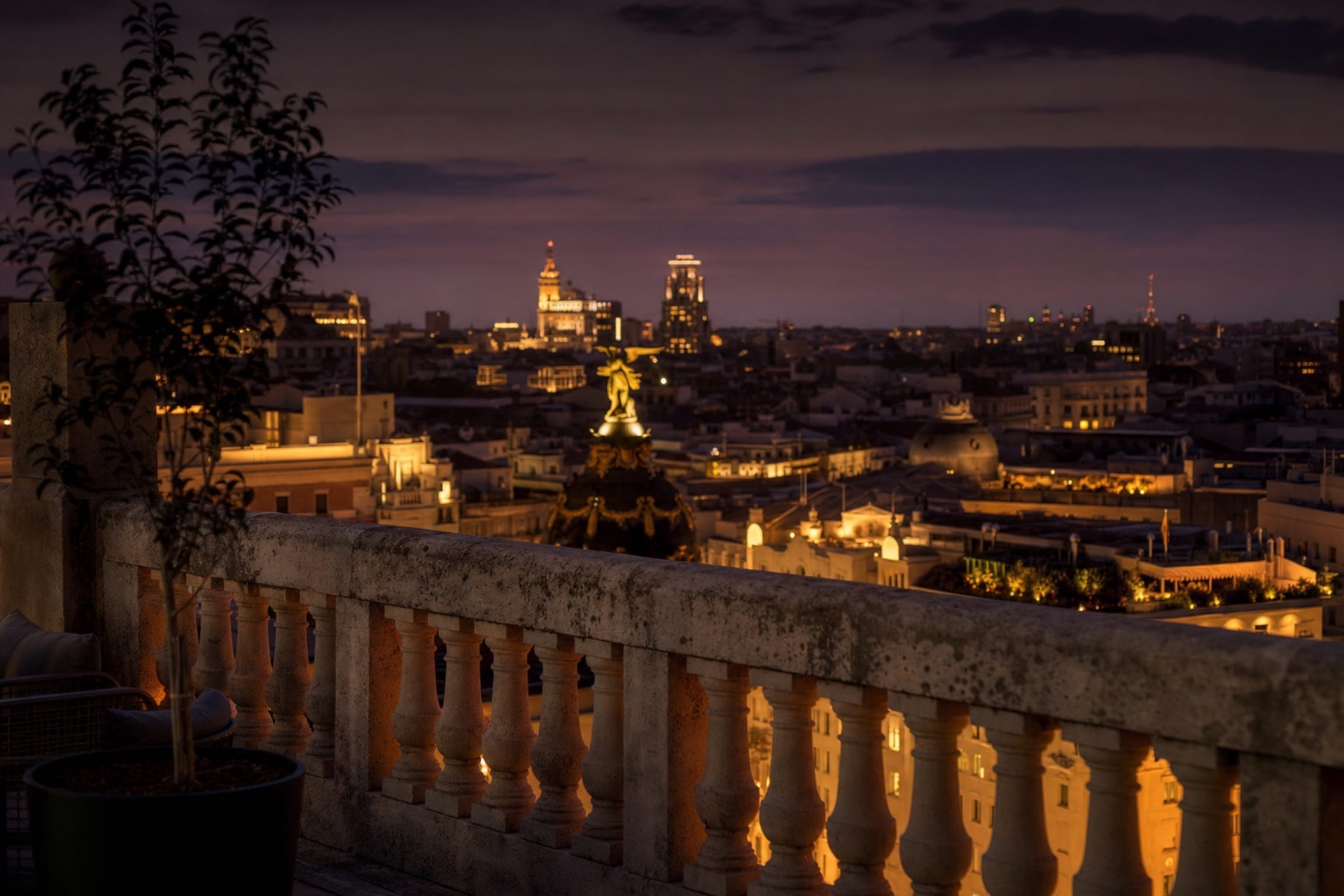
Madrid at dusk from above, rooftops and a low gold sky

A guide

Where to propose in Madrid.

Nine places that work, the hour each one needs, how busy it will be when you get there, and what the city actually allows you to put on the ground.

How to read this

Most lists of proposal spots are lists of pretty places, which is the easy half. The half that decides whether an evening works is the hour, the number of strangers in the frame, and whether the thing you were planning to set up is allowed to be there. So each place below carries four lines: when to be there, how busy it will be at that moment, where you go if the weather turns, and what the rules are. We use these places. Where we would not, we say so and explain why.

Three things before you choose a place


The hour decides more than the place

Every location on this list has one window where it looks like the photograph you have in your head, and it is usually the forty minutes on either side of sunset. That window moves by nearly three hours between June and December. A place chosen for August at eight in the evening is a different place in January, and picking the month before picking the spot saves most of the disappointment.


The permit question is about objects, not people

You can ask anyone to marry you anywhere in Madrid and nobody needs permission for a question. It changes the moment something is placed on the ground. An arch, letters, a carpet, a table, chairs, candles: that is occupation of public space, the city expects the request well in advance, and for a park you should think in terms of a couple of weeks rather than a couple of days. It is the single most common reason a plan found online cannot actually be delivered.


Every plan needs a covered second option at the same hour

Madrid gives you a lot of clear evenings and the ones it does not give you tend to arrive without much warning. A second location under cover, at the same hour and to the same standard, is not a downgrade. It is what lets you commit to the first one.

Royal Palace, north side

Jardines de Sabatini

The formal gardens laid out below the north façade of the Royal Palace, with a rectangular pool, clipped hedges and statues of Spanish kings along the terraces. It is the most photographed proposal backdrop in the city and it earns the reputation: the palace fills the frame without anyone having to be clever about the angle.

When to be there
The last hour before the gates close. The façade takes the low sun and turns gold, and before that it reads flat and white.
How busy
Busy, and busiest exactly when the light is good. The corners of the lower terrace stay far quieter than the central axis.
If the weather turns
The arcade at Plaza de Oriente, two minutes away and covered.

What the rules say

Grounds run by Patrimonio Nacional, with hours that shift with the season and gates that close well before dark in winter. Arriving and asking a question needs nothing at all. Putting anything on the ground does.

Royal Palace, west side

Campo del Moro

The other palace garden, on the west side, and far less visited because the entrance sits down on Paseo de la Virgen del Puerto and most people never find it. Long lawns, old trees, a fountain on the central avenue and the palace standing above you rather than in front of you. It is the closest thing in central Madrid to being somewhere private without paying for it.

When to be there
Mid afternoon in winter and early evening in summer. It closes earlier than almost everyone expects.
How busy
Genuinely quiet on a weekday. The central avenue carries what little traffic there is.
If the weather turns
The Royal Palace colonnade, or the arcade at Plaza de Oriente a short walk uphill.

What the rules say

Same rules as Sabatini. It also closes at short notice for official events at the palace, which is the one thing worth checking again the same week you go.

Retiro, Felipe IV gate

El Parterre

The formal French garden just inside the Puerta de Felipe IV, geometric and symmetrical, with a Montezuma cypress at one end that is generally held to be the oldest tree in Madrid, planted around 1633. It is the first thing you reach coming from the Prado and almost everyone walks straight through it towards the lake.

When to be there
First light, or the hour before sunset. It faces in a way that keeps its shape in both.
How busy
Light. The park's traffic passes it rather than stops in it.
If the weather turns
Straight back out of the gate and into the covered entrance of the Prado, four minutes on foot.

What the rules say

Public park, so the city's rules on occupying public space apply the moment you set something down.

Retiro, south east

Jardines de Cecilio Rodríguez

A walled formal garden inside the Retiro, laid out as a series of hedged rooms with a pergola, fountains and peacocks that move around as though the place belongs to them. Because it has its own walls and its own gates it feels private in a way nothing else in the park manages, and hardly anyone thinks to go in.

When to be there
Late afternoon. The hedges are tall enough that the light goes early in the lower rooms.
How busy
The quietest of the Retiro options, most days of the year.
If the weather turns
The Palacio de Velázquez, six or seven minutes north through the park and indoors.

What the rules say

Public park, but with its own opening hours, and they are shorter than the Retiro's. Check the day, not the week.

Retiro, south west

La Rosaleda

The rose garden in the south west corner of the park, a circular layout of beds and pergolas designed a century ago and still kept the way it was drawn. For six weeks a year it is the best thing on this list by a distance, and for the rest of the year it is a well-swept empty circle.

When to be there
May and the first half of June, when the roses are actually out, in the hour before sunset.
How busy
Deserted for ten months. Full for the six weeks that matter, and full of people photographing roses.
If the weather turns
The Palacio de Velázquez, five minutes on foot and under a roof.

What the rules say

Public park. Same rules as the rest of the Retiro.

Retiro, by the small lake

Palacio de Cristal

The glass pavilion beside the small lake, built in 1887 to hold plants brought from the Philippines and used now by the Reina Sofía for contemporary art. Entry is free. Depending on the show, the inside is either an empty room made of light or an installation you cannot walk through, and that changes several times a year.

When to be there
Late morning, when the light comes through the glass and the room is still nearly empty.
How busy
One of the three busiest spots in the Retiro from midday onwards.
If the weather turns
It is the plan B for half the park, which is exactly why it fills when the weather turns.

What the rules say

It is a museum venue with its own rules, and whatever is installed that month decides what is possible inside. Worth confirming the same week.

Parque del Oeste

Templo de Debod

The Egyptian temple given to Spain in 1968 and rebuilt above Parque del Oeste, which is why so many sunset photographs of Madrid appear to be taken from the same spot. It is also the one place on this list where the rules and the market openly disagree, and it is worth knowing which side you are standing on.

When to be there
Sunset, which is also the worst possible moment to be there for this.
How busy
Hundreds of people, phones raised, all facing the same direction.
If the weather turns
The colonnade of the Cuartel de la Montaña gardens, or down into the park itself.

Read this one twice

Madrid city council authorises photography and filming inside the Debod grounds only when the purpose is the cultural promotion of the monument or of the museum activities held there. Its own wording is that any other purpose, free or commercial, will be refused. Requests go in seven days ahead and the shoot happens on a Monday. Proposals are nonetheless sold here, with published prices and professional photographers. We do not sell them, and we would ask hard questions of anyone who does.

Vallecas, east of the centre

Cerro del Tío Pío

Three grass hills east of the centre, known to everyone in the neighbourhood as the Siete Tetas, facing straight back at the skyline. There is no monument, no gate and no gardener. There is the whole city laid out below you, the sun going down behind it, and almost nobody in the frame.

When to be there
The forty minutes after the sun goes behind the skyline, when the buildings turn to silhouette and the sky is still bright.
How busy
People walking dogs, and a handful who came for the same view. Nothing like the centre.
If the weather turns
There is none on site, and that is the honest weakness of this one. It needs a decision the day before rather than at midday.

What the rules say

Public park, and the city's rules on occupying public space apply here the same as anywhere else.

Central, hired for the evening

A private rooftop

The only entry on this list where you decide what the space looks like. A terrace above the centre, hired and empty except for the two of you, the skyline behind and a door that nobody else comes through. It is the answer for anyone who has read everything above and concluded that the crowds and the rules are the whole problem.

When to be there
Whatever hour you choose, which is most of what you are paying for.
How busy
None, and that is the point.
If the weather turns
Written into the hire before you sign it. Most terraces worth using have a room behind them.

What the rules say

Private property, so you are buying permission rather than hoping. Expect a hire fee to sit in the budget before anything else does.

The questions that come with this

Where is the best place to propose in Madrid?
For a first visit and a classic photograph, the Jardines de Sabatini in the last hour of light. For privacy without a hire fee, Campo del Moro or the Jardines de Cecilio Rodríguez. For the skyline and almost nobody around, Cerro del Tío Pío after sunset. For complete control of the space and the hour, a hired rooftop. There is no single answer, because the right place depends on the month and on how much of an audience you are willing to have.
Do you need a permit to propose in a Madrid park?
Not to ask the question. You do need to make a request if you intend to place anything on the ground, because that counts as occupying public space, and for a park the request should go in weeks rather than days ahead. This is the point at which most plans found online quietly stop being deliverable.
Can you propose at the Templo de Debod?
You can stand there and ask. What is not permitted is a staged photo shoot: Madrid city council authorises photography and filming in the Debod grounds only for the cultural promotion of the monument or the museum activities held there, seven days ahead and on a Monday, and states that any other purpose, free or commercial, will be refused. Proposal packages are sold there anyway. We would not use it and we would want to know why someone else is.
What is the best time of day?
The hour before sunset for anywhere with architecture in the frame, and the forty minutes after sunset for anywhere with the skyline in it. Both windows move by close to three hours across the year, so the month matters as much as the clock.
What happens if it rains?
You go to the covered option, which is why every place on this list is listed with one. What matters is that the alternative is chosen and held in advance, at the same hour, rather than found on a phone twenty minutes beforehand.
When do most people propose in Madrid?
Between late November and Valentine's Day, with December the single busiest month. Restaurants, photographers and any terrace worth hiring are all working from the same short calendar, so those dates are taken earliest and are the ones worth deciding first.
We produce the evening around the place.

If one of these is already the picture in your head, tell us which and when. If none of them is, describe the two of you and we will suggest the one that fits.


concierge@insideexperiences.com